Focus on Eczema and the Alaska Winter Itch
 As Alaska settles into winter, eczema-prone skin has a lot working against it. Cold air, low humidity, and months of indoor heat pull moisture out of the skin, and for many of our patients that is exactly when the itching ramps up. Eczema is one of the conditions we treat most often at Alaska Family Dermatology, in babies, kids, teens, and adults. This guide covers what eczema is, how to recognize it, what treatment looks like today, and when it is time to come see us.
Eczema at a Glance
- What it is: a group of chronic skin conditions that cause dry, itchy, inflamed skin. Atopic dermatitis is the most common type.
- Is it contagious? No. You cannot catch eczema or give it to someone else.
- How common is it? More than 31 million people in the United States live with eczema, according to the National Eczema Association.
- Can it be cured? There is no cure, but the right treatment plan can calm flares and keep skin comfortable.
What Is Eczema?
Eczema is a group of long-lasting, non-contagious skin conditions that make the skin dry, itchy, and inflamed. The most common form is atopic dermatitis, and many people use the two terms to mean the same thing.
Eczema develops when the skin barrier does not hold moisture well and the immune system overreacts to things that would not bother most skin. Genetics play a part, which is why eczema often runs in families alongside asthma and hay fever. It usually begins in childhood. The National Institute of Allergy and Infectious Diseases estimates that eczema affects 10% to 30% of children and 2% to 10% of adults. It can also show up for the first time in adulthood.
Symptoms tend to come and go. A stretch of calm skin can be followed by a flare, when the itch and rash return.
The Seven Types of Eczema
The National Eczema Association recognizes seven types, and it is possible to have more than one at the same time:
- Atopic dermatitis: the most common type, often starting in infancy or childhood.
- Contact dermatitis: a reaction to something that touches the skin, such as a fragrance, metal, or cleaning product.
- Dyshidrotic eczema: small, intensely itchy blisters on the hands and feet.
- Nummular eczema: round, coin-shaped patches.
- Neurodermatitis: thick, itchy patches that develop from repeated scratching.
- Seborrheic dermatitis: flaky, scaly patches on the scalp, face, and other oily areas.
- Stasis dermatitis: irritation on the lower legs related to poor circulation.
Common Eczema Triggers in Alaska
Triggers are different for everyone, but these are the ones we hear about most:
- Cold, dry winter air and low indoor humidity from forced-air heat or a wood stove
- Long, hot showers and baths
- Wool and other scratchy layers worn against the skin
- Sweat trapped under winter gear
- Fragranced soaps, lotions, laundry detergents, and fabric softeners
- Allergens such as dust mites, pet dander, and pollen
- Stress and poor sleep
What Are the Symptoms of Eczema?
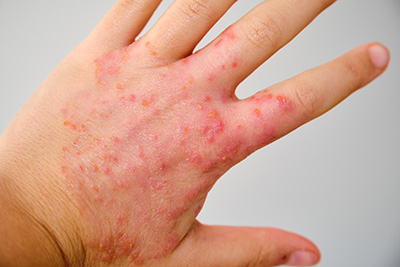
Itch is the hallmark of eczema, and for many people it is the most bothersome symptom. Other signs include:
- Dry, rough, or scaly skin
- Patches that look red on lighter skin, or purple, brown, or gray on darker skin
- Small bumps that may ooze clear fluid and crust over when scratched
- Thickened, leathery skin in areas that are scratched often
- Cracked, sore, or swollen skin
- Trouble sleeping because of nighttime itching
Where eczema shows up often depends on age. In babies it commonly appears on the cheeks and scalp. In children it tends to settle into the creases of the elbows and knees, along with the wrists and ankles. Teens and adults often have it on the hands, eyelids, and neck.
How Is Eczema Treated?
Eczema treatment focuses on three things: repairing the skin barrier, calming inflammation, and avoiding the triggers that set off flares. The right plan depends on your age, the type of eczema, where it is on the body, and how severe it is. Options include:
- Daily skin care: short, lukewarm showers, a gentle fragrance-free cleanser, and a thick fragrance-free cream or ointment applied within a few minutes of bathing and again during the day.
- Trigger management: identifying and reducing the things that set off your flares. If a contact allergy is suspected, comprehensive patch testing can pinpoint the cause.
- Prescription steroid creams and ointments: topical corticosteroids that reduce inflammation and itch during a flare.
- Nonsteroid prescription creams: options such as calcineurin inhibitors and newer nonsteroid topicals, which are especially useful on delicate areas like the face, eyelids, and skin folds.
- Phototherapy: controlled light therapy that helps calm widespread or stubborn eczema.
- Biologics and other systemic medications: injectable biologics, such as dupilumab (Dupixent), and oral medications that target the specific immune signals driving moderate to severe eczema.
- Treating infection: eczema-prone skin gets infected more easily, so antibiotics or other medications may be needed if that happens.
Children are a big part of what we do. Dr. Gina Brown is the only board-certified pediatric dermatologist in Alaska, and our team builds treatment plans that work for infants, kids, and their families, not just adults.
When Should You See a Dermatologist for Eczema?
Mild dryness often improves with a consistent moisturizing routine. It is time to see a dermatologist if:
- Itching is interrupting sleep, school, or work
- Over-the-counter moisturizers and hydrocortisone have not helped after a week or two
- The rash keeps coming back, is spreading, or covers a large area
- It affects the face, eyelids, or hands
- Your baby or child has a persistent rash
- You are not sure whether it is eczema or something else
- You see signs of infection, such as oozing, yellow crusts, pus, or increasing pain
A rash that comes with a fever, or painful blisters that spread quickly, needs same-day medical attention.
Eczema Care in Anchorage
You do not have to wait out another itchy winter. Alaska Family Dermatology treats eczema in patients of every age, from a baby’s first dry patches to adults who have managed flares for years. We will help you figure out what is triggering your skin and build a plan that fits your life. Schedule an appointment online or call us at 907-268-2067 to get started.
Frequently Asked
Eczema
Eczema is a group of chronic, non-contagious skin conditions that cause dry, itchy, inflamed skin. Atopic dermatitis is the most common type. Symptoms usually come and go in cycles called flares.
No. Eczema cannot be passed from person to person. It is linked to genetics, the skin barrier, and the immune system, not to an infection you can catch.
Common triggers include dry skin, cold or dry air, hot showers, fragranced soaps and detergents, scratchy fabrics like wool, sweat, allergens such as dust mites and pet dander, and stress. Triggers vary from person to person, so tracking what happens before a flare can help.
Cold outdoor air holds very little moisture, and indoor heating dries the air even more. That combination pulls water out of the skin and weakens the skin barrier, which makes itching and flares more likely. Moisturizing more often and using a humidifier at home can help.
There is no cure for eczema, but it can be controlled. With good daily skin care, trigger management, and the right prescription treatment when needed, most people can keep flares mild and infrequent.
Look for a thick, fragrance-free cream or ointment rather than a thin lotion. Apply it within a few minutes of bathing, while the skin is still slightly damp, and again during the day. Products with the National Eczema Association Seal of Acceptance are a good place to start.
Many children see their eczema improve as they get older, and some outgrow it. Others continue to have symptoms into adulthood, or see it return later in life. Treating it early helps keep your child comfortable and protects their skin and sleep.
Both cause inflamed, uncomfortable skin, but they are different conditions. Eczema is usually intensely itchy and often appears in skin creases, such as the inside of the elbows and behind the knees. Psoriasis tends to form thicker, well-defined patches with silvery scale, often on the outside of the elbows and knees, the scalp, and the lower back. A dermatologist can tell them apart and recommend the right treatment.
See a dermatologist if itching is affecting sleep or daily life, if over-the-counter moisturizers and hydrocortisone have not helped after a week or two, if the rash keeps returning or spreading, or if you notice signs of infection such as oozing, yellow crusts, or increasing pain.